
Flow Is Not About Speed
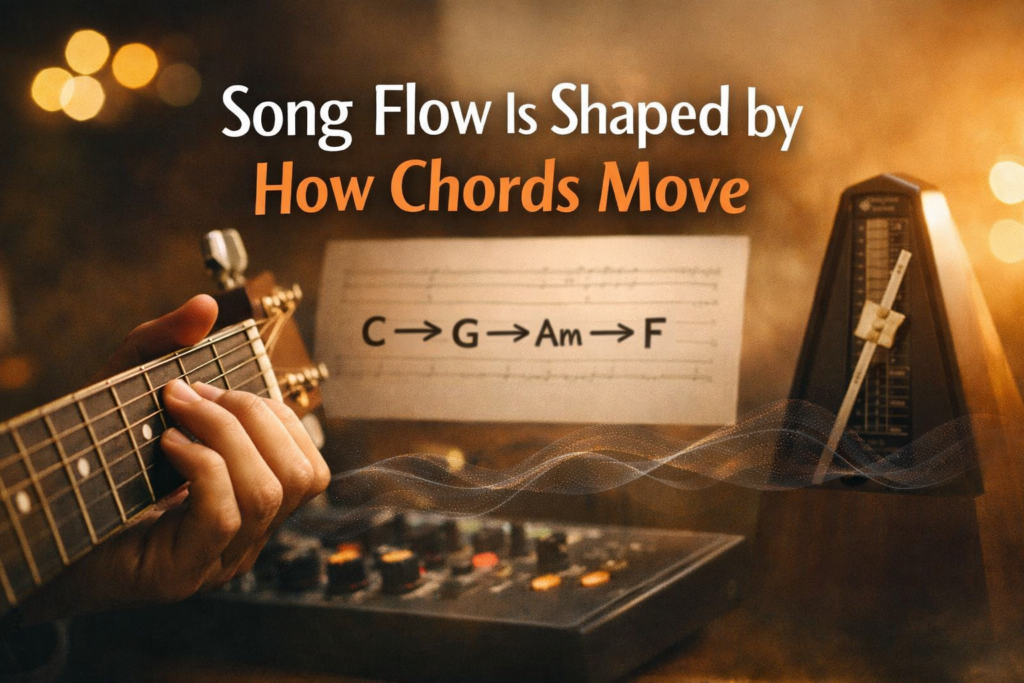
In many songs, what we call flow is often misunderstood as tempo, rhythm, or groove. In reality, chord flow is one of the strongest forces shaping how a song feels as it moves forward. Even with a steady rhythm, a song can feel stiff or alive depending on how chords shift from one to another.
When chord movement feels natural, listeners don’t notice the mechanics — they simply feel carried along.
Chord Flow Creates Direction
A song without clear chord flow feels like it’s standing still. Chords are not isolated shapes; they are steps in a journey. Each change either:
- pulls the listener forward
- releases tension
- or gently resets the emotional balance
Smooth chord movement gives the song direction. Abrupt or poorly placed shifts interrupt that direction, breaking the emotional continuity.
Why Simple Progressions Often Flow Better
Many great songs rely on simple progressions not because they lack creativity, but because simplicity allows smoother motion. Familiar chord relationships reduce friction, letting the listener focus on melody and emotion.
Flow is built when:
- chord changes happen at the right emotional moment
- transitions feel expected but not boring
- repetition reinforces comfort
This is why songs with basic harmony can feel more fluid than complex ones.
Space Between Chords Matters
Flow isn’t only about the chords themselves — it’s about the space between them. Sustained chords, subtle pauses, and delayed transitions give time for emotion to settle.
Rushing chord changes can make a song feel nervous. Allowing chords to breathe makes the flow feel calm, confident, and intentional.
How Musicians Shape Flow While Playing
From a player’s perspective, chord flow is shaped by:
- timing accuracy
- dynamic control
- how smoothly fingers move between shapes
Good flow doesn’t come from fast hands, but from controlled movement. When the player feels the shift, the listener feels it too.
TuneChord Insight
A song doesn’t flow because it moves fast.
It flows because chords move with purpose.
When chord shifts feel right, the song carries emotion naturally — without forcing it.

Pingback: Chord Magic: Make Your Song Come Alive – TuneChord – All About Chords, Feel, and Progression
Even though the chords are simple, if you dig deeper, they will give birth to a binding and warm feeling. haha