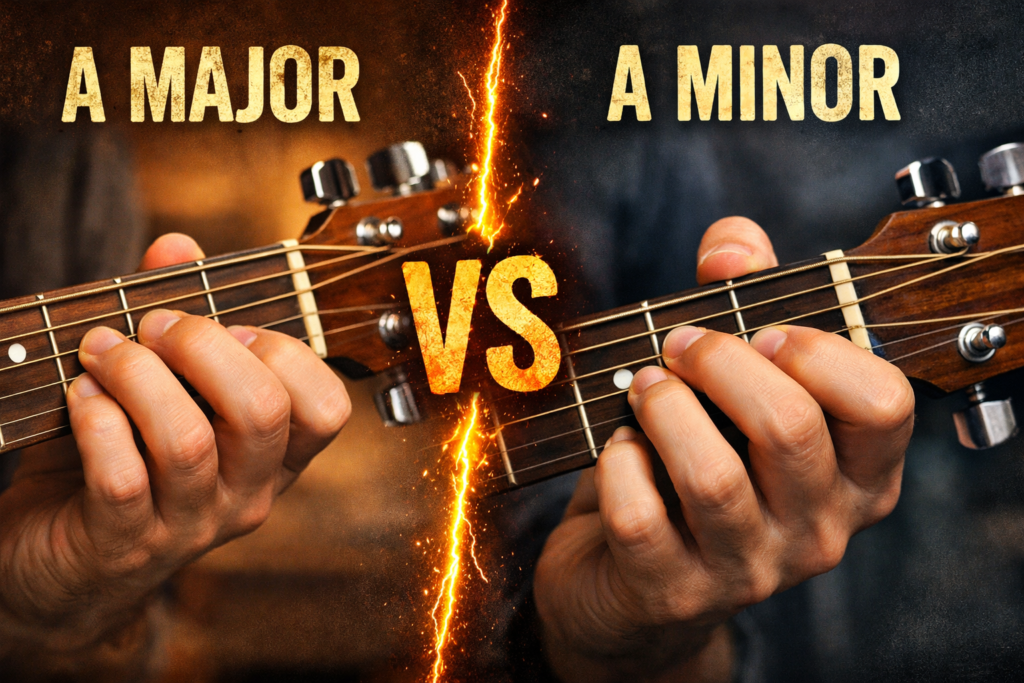
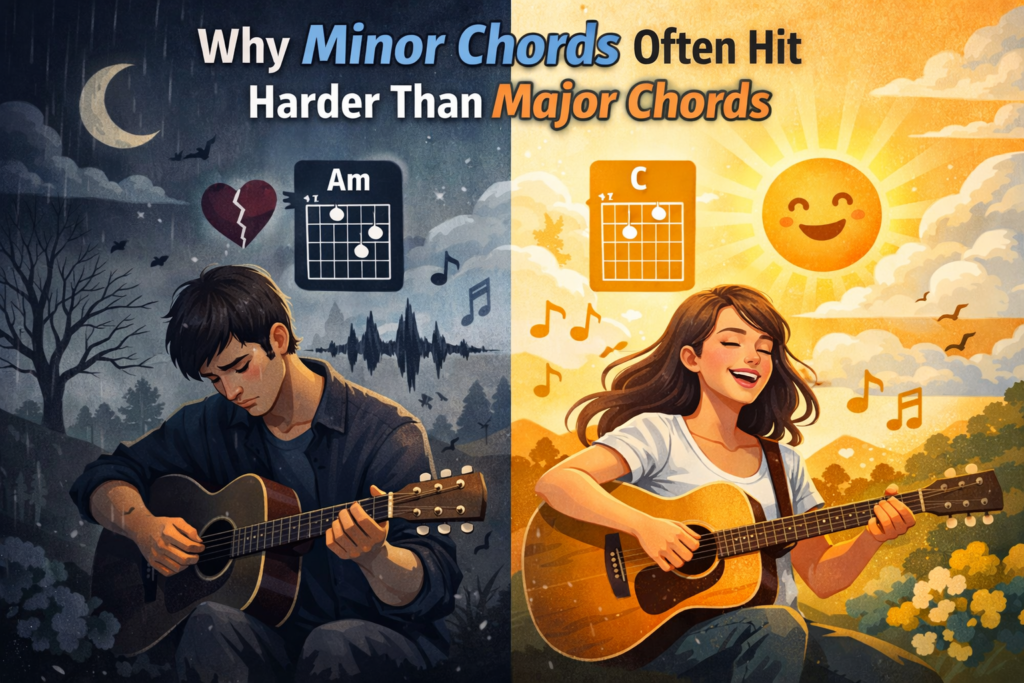
Have you ever played a minor chord and felt a sudden wave of emotion, while a major chord just… feels happy, simple, and light? There’s something about minor chords that seems to hit deeper in our musical soul. Let’s explore why.
The Emotional Weight of Minor Chords
Minor chords carry a natural tension. Unlike major chords, which sound bright and resolved, minor chords introduce a slight sadness, longing, or introspection. It’s this contrast that makes them emotionally powerful.
For example:
- Am (A minor) feels reflective, intimate, almost confessional.
- Em (E minor) carries a haunting, lingering quality that can tug at your heartstrings.
Even in pop songs, minor chords often appear at key emotional points, like the chorus or the bridge, giving the music depth and relatability.
The Science Behind the Feel
Research shows that humans respond to certain frequencies and intervals emotionally. Minor chords use intervals that our brains perceive as tension or melancholy, while major chords signal stability and joy. That’s why your favorite sad song hits harder when it uses a minor progression.
Minor vs Major in Songwriting
Songwriters use this contrast intentionally:
- Start with a major chord to set a happy scene.
- Introduce a minor chord at a pivotal moment to evoke emotion.
This push-and-pull keeps the listener engaged and allows music to tell a story beyond words.
How to Play With Minor Chords
If you want your music to resonate:
- Experiment with minor 7ths and minor 9ths for richer emotion.
- Mix major and minor chords in your progression to create tension and release.
- Use arpeggios in minor chords to highlight emotional detail.
The Takeaway
Minor chords are not “sad” just for the sake of it—they are tools to communicate emotion deeply. When you understand their impact, you can craft music that touches listeners in ways major chords alone rarely do.
“Minor chords whisper to the soul what major chords shout with joy.”